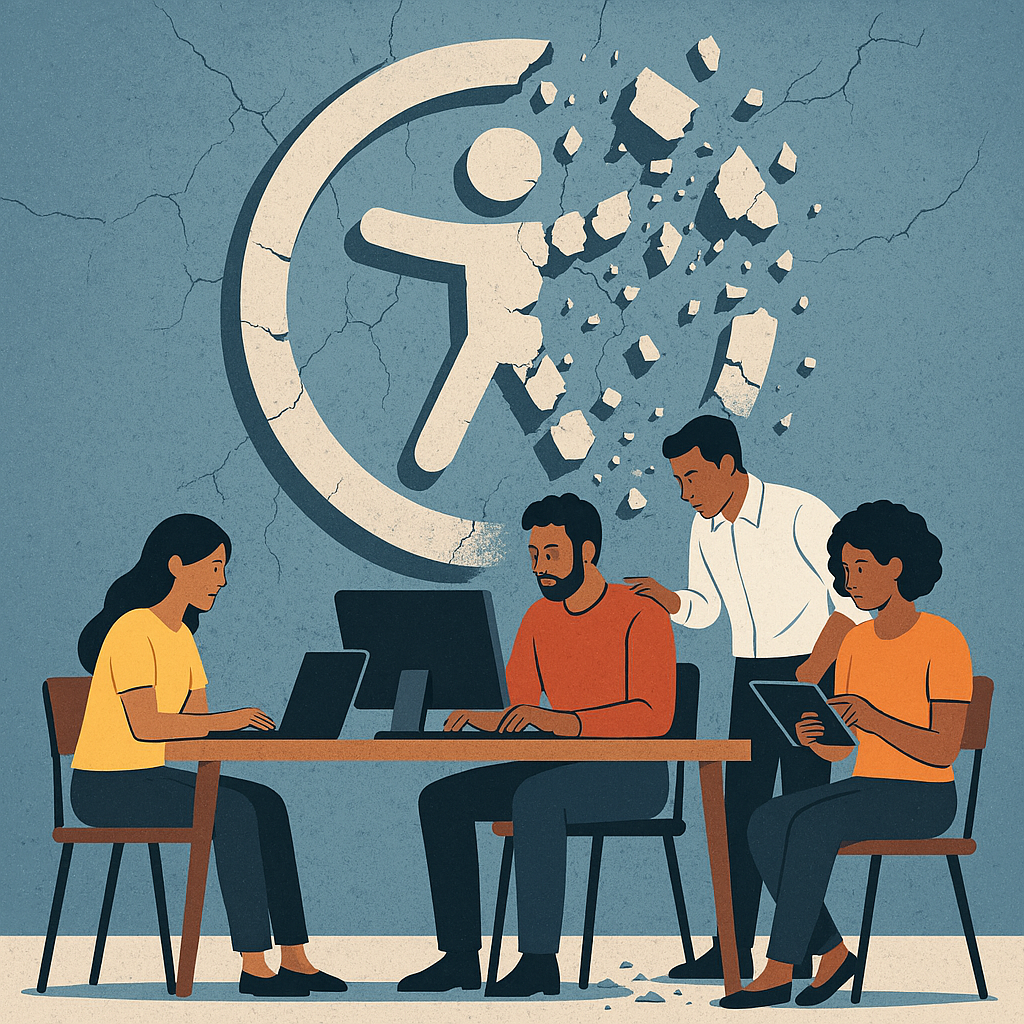
Several people are working while an accessibility symbol crumbles in the background.
Most organizations start accessibility efforts for a single reason—usually compliance, altruism, or ROI—and those efforts eventually stall because the motivation never evolves. Just like a gym membership that fizzles when the initial goal fades, accessibility collapses when the organization stays zoomed in on one narrow purpose.
Sustainable accessibility only happens when organizations zoom out and adopt a Unified Model of Digital Access that blends compliance (risk reduction), altruism (inclusive experience), and ROI (business value). When all three models work together, accessibility becomes stable, strategic, and self‑sustaining—benefiting employees, customers, and the business itself.
Why do so many organizations start accessibility efforts only to have them fizzle out? I’ve been working with organizations on accessibility strategy for over a decade and have seen that when organizations initially approach digital accessibility, they do it for a specific reason. If the organization never evolves beyond its initial reasoning, accessibility falters, which is, unfortunately, what usually happens.
Many other factors may contribute to the struggle, but once an accessibility effort is initiated, if the organization doesn’t zoom out and consider all the reasons why accessibility is important, it will ultimately stall and need to be restarted at some point.
It’s like joining the gym on January 1st because you want to get in shape for your Caribbean vacation in March. You’re probably still paying for the membership in June, but working out is as much of a memory as the warm Caribbean sun. However, if after a few weeks, you step back and realize you feel better, are becoming more capable, and benefiting from socializing with new friends – in other words, your reason for having a gym membership has evolved – you’re much more likely to maintain a good fitness routine.
To further understand why digital accessibility doesn’t sustain, we need to look at the reasons organizations initiate an accessibility effort. We can think of those reasons as Organizational Models of Digital Access. However, before we get into the organization, let’s flip the coin over and consider the people who benefit from accessibility.
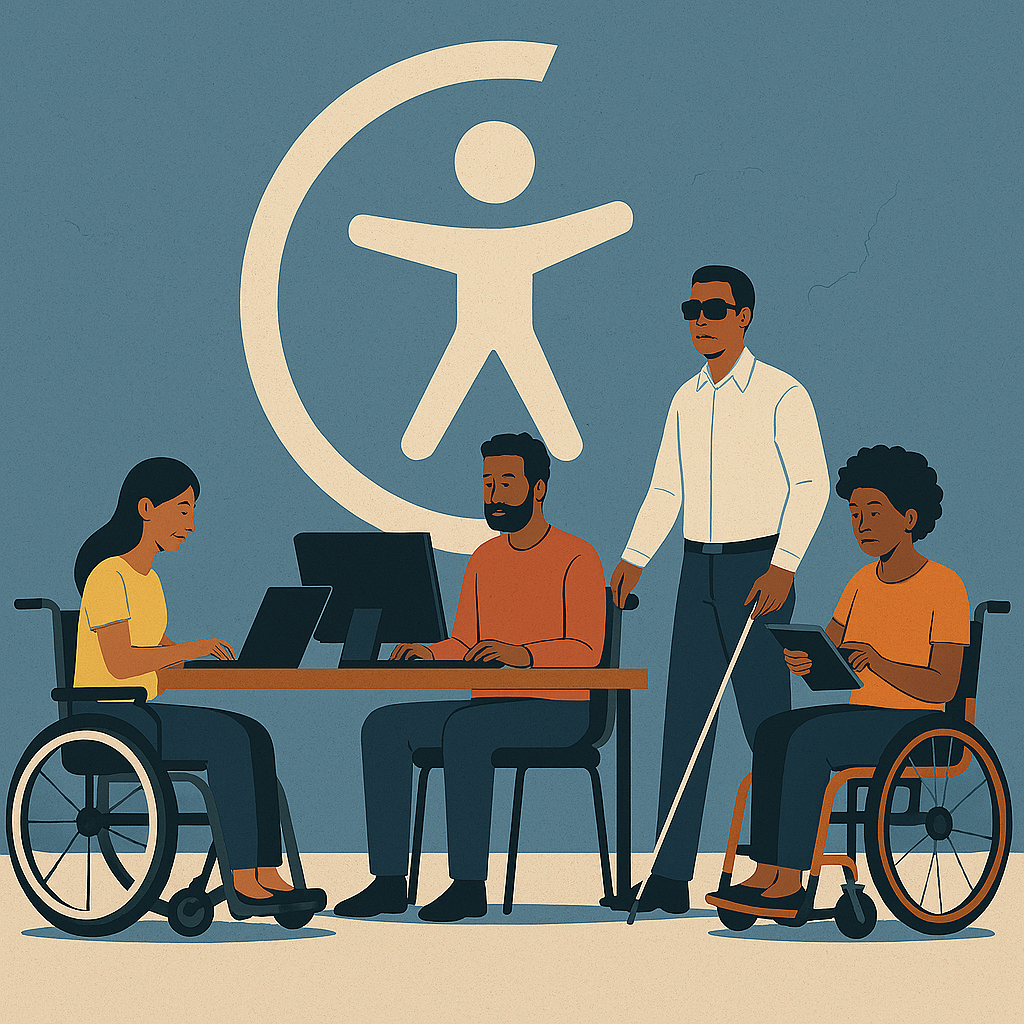
A group of people with disabilities successfully working together.
People are the heart of any business, and every business has two hearts. The people who run the business and the people who are customers of the business. As we’ll discuss, people with disabilities are a significant part of both of those hearts. Like any group of people, if we don’t think of them in the right way, it’s damaging to the heart. Fortunately, we have frameworks to help us understand, as a business, how to approach and consider this group. These are the models of disability, and they describe the perspective from which people with disabilities are approached.